
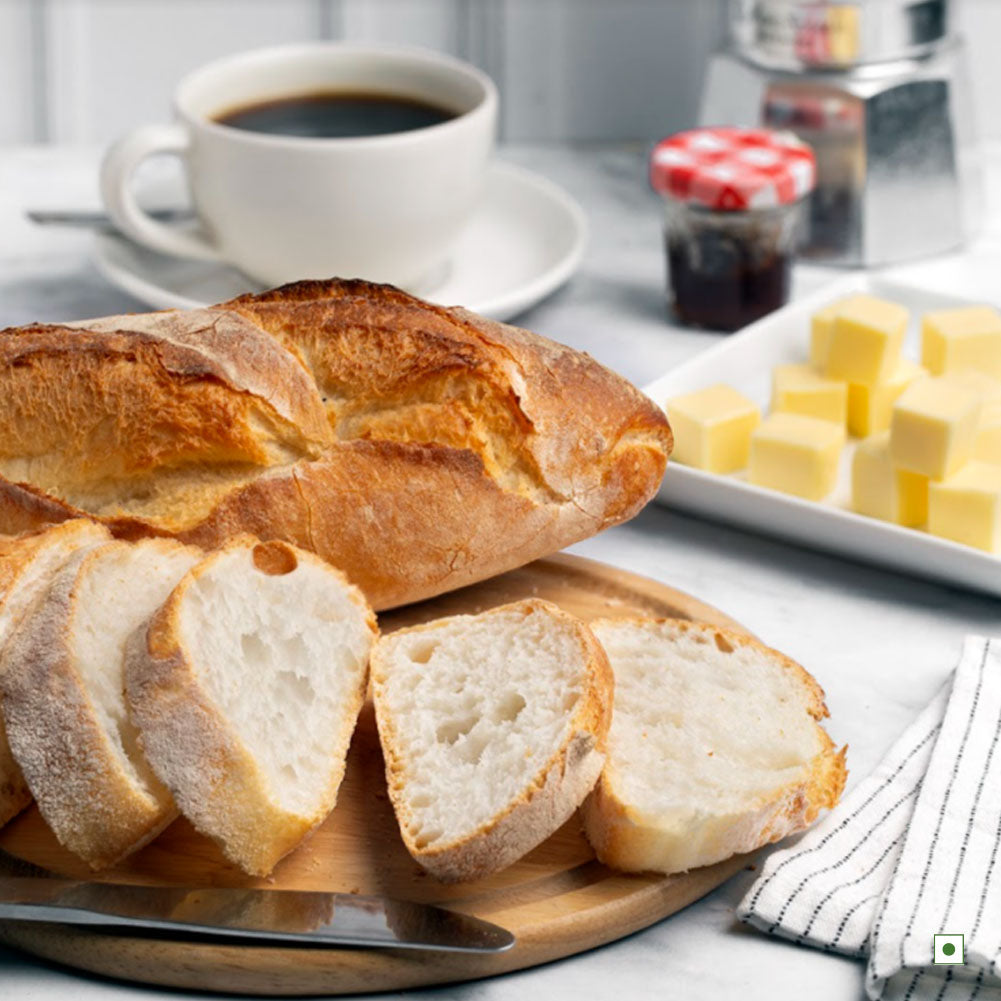
Bread is a staple food in kitchens around the world. It serves as a convenient go-to option for many, as it is easily available and can be prepared within minutes. It is used to prepare a variety of breakfast, brunch, and snack options.
Various types of bread are available in the market. Several FMCG brands and bakeries produce them. Bakery breads stand out for their high-quality ingredients and refined baking techniques.
Brown and white bread are two widely produced varieties. They are used in households as well as commercial food establishments. Since these breads are widely consumed, understanding key details about them is important. This blog offers a clear difference between brown bread and white bread.
What Is Brown Bread?
As the name suggests, brown bread is a type of bread that has a brown colour. It derives its colour from the whole wheat flour used in its preparation. The whole wheat flour is obtained from wheat grain. It includes three key components: bran, germ, and endosperm. Bran is rich in fibre. Germ holds key vitamins and minerals. Endosperm comprises protein and carbohydrates.
The whole wheat flour is not refined. The flour is mixed with yeast, water, salt, and other ingredients to prepare the dough. The dough is kneaded, proofed, shaped, and baked. The final baked brown loaf has a darker colour and a denser texture. It can be enjoyed simply toasted or used to prepare sandwiches and a variety of other dishes.
What Is White Bread?
White bread is characterised by its light colour, which is how it gets its name. It is made using refined wheat flour, commonly known as "maida" in Indian kitchens. Refined wheat flour contains only the endosperm. It does not include bran and germ.
The refined wheat flour is mixed with yeast, water, sugar, salt, and fat to form a dough. The dough is kneaded, allowed to rise, shaped, and baked. The final white bread loaf has a lighter colour and a soft, fluffy texture. You can use it to prepare sandwiches, savouries, and desserts.
What is the nutritional difference? Brown bread vs white bread:
The table draws a clear difference between brown bread and white bread:
Brown vs white bread nutrition value:
- Brown bread – Since it contains all three components: bran, germ, and endosperm, it naturally retains more essential nutrients, including vitamins such as E and B6.
- White Bread – Since white bread is made using refined wheat flour, several essential vitamins and minerals are lost during the refining process.
Brown bread vs white bread fibre content:
- Brown bread – It is high in dietary fibre, aiding in digestion and leading to related health benefits.
- White Bread – It is lower in dietary fibre, as the bran and germ are removed during processing.
Brown bread vs white bread calories:
- Brown bread – Brown bread is generally considered to have slightly fewer calories than white bread.
- White Bread – White bread contains slightly more calories, although the exact amount may vary depending on the product and ingredients used.
Brown bread vs white bread antioxidants:
- Brown bread – Brown bread has a high number of antioxidants due to the presence of bran and germ.
- White Bread – White bread contains fewer antioxidants due to the absence of bran and germ.
White bread vs whole wheat bread glycaemic index:
- Brown bread – It has a lower glycaemic index. Hence, it has a slower blood sugar impact.
- White Bread – It has a higher glycaemic index. Therefore, it causes rapid, significant spikes in blood sugar.
Which bread should you choose: brown bread or white bread?
The choice of bread depends on several individual factors. Hence, consider the factors below to make an informed and suitable choice.
-
Nutritional requirements:
If you are particular about your daily nutritional intake, consider the bread's nutritional value to make a choice. For instance, if your goal is to increase your daily fibre intake, adding brown bread to one of your meals is a viable option. However, it is important to maintain moderation in portion sizes, as a balanced approach is key to any diet.
-
Dietary restrictions:
If you have diabetes or simply want to limit sugar intake, your doctor or nutritionist may recommend avoiding white bread. This is because white bread has a higher glycaemic index, which may lead to a quicker rise in blood sugar levels after consumption. In this case, explore brown bread. Due to its low glycaemic index, it has a slower impact on blood sugar. Furthermore, the fibre content helps keep you full for longer, which may reduce unnecessary snacking and overeating, both of which can negatively impact your overall health.
-
Eating preferences:
At the end of the day, food choices are about taste, so it is important to consider your personal preferences. If you prefer your toasts or sandwiches to be denser, brown bread is a good option. If you prefer a slightly sweet flavour and a softer texture, white bread may be a better choice.
How to buy bread?
The purchase of bread is often limited to considerations such as pack size and expiry date. However, there are several other important factors to consider. Below is a mention of them:
-
Ingredient list:
Checking the ingredients list is essential before purchasing any product. This is especially important in the case of bread. This is because many brands may market their products as healthy. The ingredients list accurately reflects their true nutritional value.
Theobroma offers two options: Whole Wheat Bread and Multigrain Bread. Each is prepared using high-quality ingredients. All ingredients are clearly mentioned on the bread packet, ensuring complete transparency.
Both options are available in 250-gram and 400-gram packs. Walk into the nearest Theobroma outlet or place your order online.
-
Packing:
When it comes to food items with a limited shelf life, packaging plays a crucial role in maintaining their quality and freshness. Therefore, choose a well-sealed packet that is easy to handle and can be stored properly.
Theobroma takes great care in the packaging of all its products. The breads are neatly packed in airtight packets. This ensures that the bread remains fresh inside the pack, while preventing any external contamination,
-
Due Date:
Checking the expiry date is very important, as it helps determine how long the product is safe for consumption. Ideally, choose a pack with a due date several days ahead. This will allow you sufficient time for safe and convenient consumption.
Theobroma indicates both the production and expiry dates on its packaging, enabling customers to easily track shelf life. This ensures you consume the bread at optimal freshness and quality.
Summing It Up:
Bread is a staple in almost every kitchen. It is used in a variety of recipes and as a quick solution for sudden hunger. Different types of bread are available in the market. Brown and white bread are two common types.
Brown bread is made from whole wheat flour. It is high in fibre, contains essential vitamins and minerals, and has a lower glycaemic index. White bread is made from refined wheat flour, popularly known as maida. It has a smoother texture but lacks several key nutritional benefits. Consider your nutritional needs and dietary preferences when choosing a bread.
Theobroma offers Whole Wheat Bread and Multigrain Bread. Both options are thoughtfully prepared using quality ingredients, all of which are transparently listed, ensuring a balance of taste and nutritional value.